
A costume that looks brand new rarely looks right. Capes have been dragged through mud. Tunics have been slept in. Weathering is what makes cloth look as if it has lived.
Fabric Spray builds that wear in light layers and is heat set with an iron, so the weathering stays in the cloth through a full convention day and through the wash. This guide covers where to place the wear, how to mix dirt colours from six bottles and how to fix the result.
What you need
- The costume piece. Clean and dry before any paint goes on.
- An offcut of the same fabric. For testing the layers first.
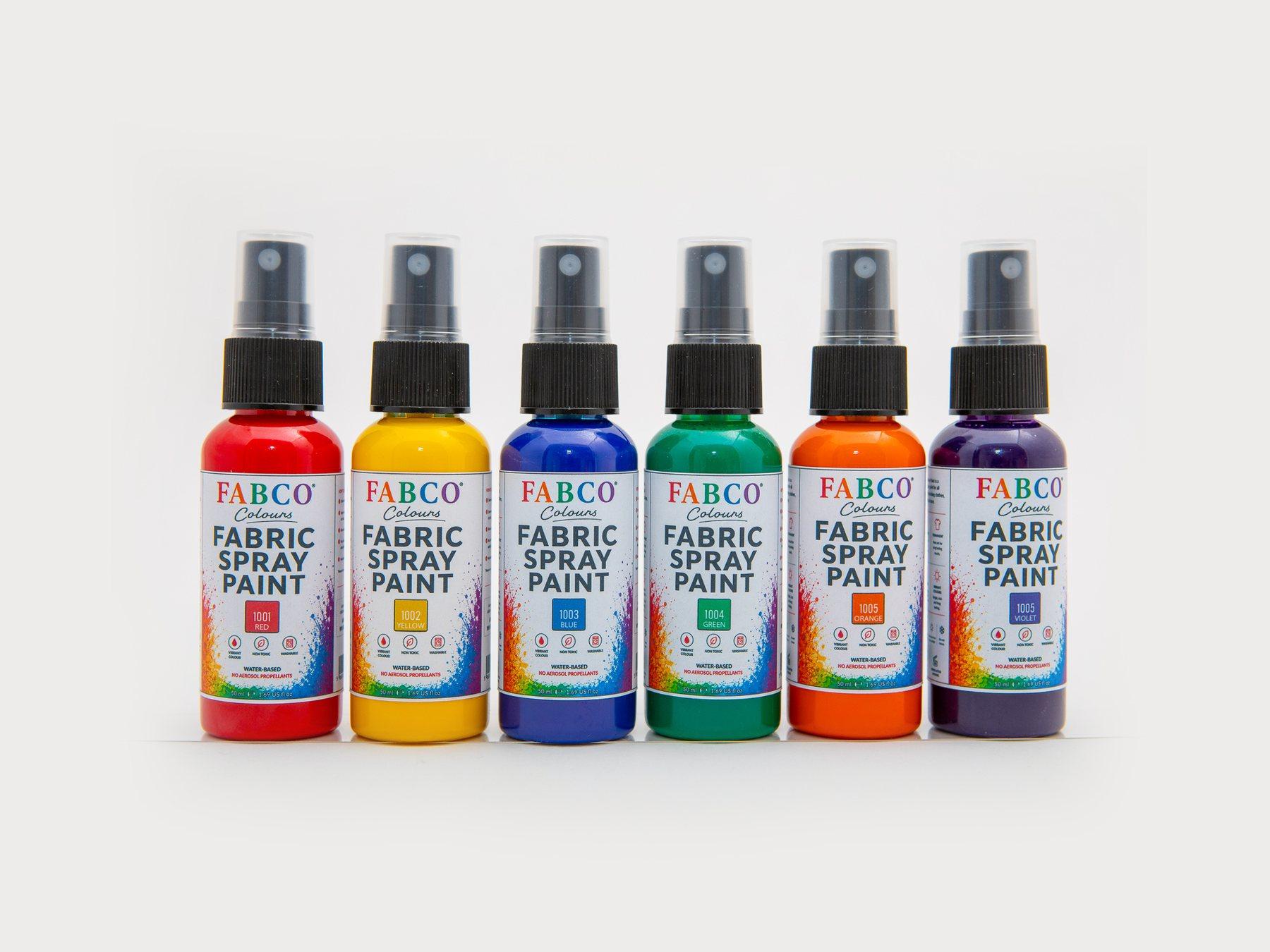
- Fabric Spray. Orange, Green, Red and Violet do most of the weathering work.
- A damp sponge. For softening hard edges.
- An iron. For heat setting once the paint is dry.
Decide where the wear goes
Dirt is not even. Before spraying anything, think about what the character has been doing. Wear collects in the same places on every garment.
- Hems and cuffs. Whatever drags or brushes the ground gets darkest.
- Knees, elbows and seat. Wherever the body presses against the world.
- Seams and folds. Grime settles into the low places and stays there.
- Under straps and belts. Anything worn over the cloth leaves a mark around its edges.
Making dirt from six colours
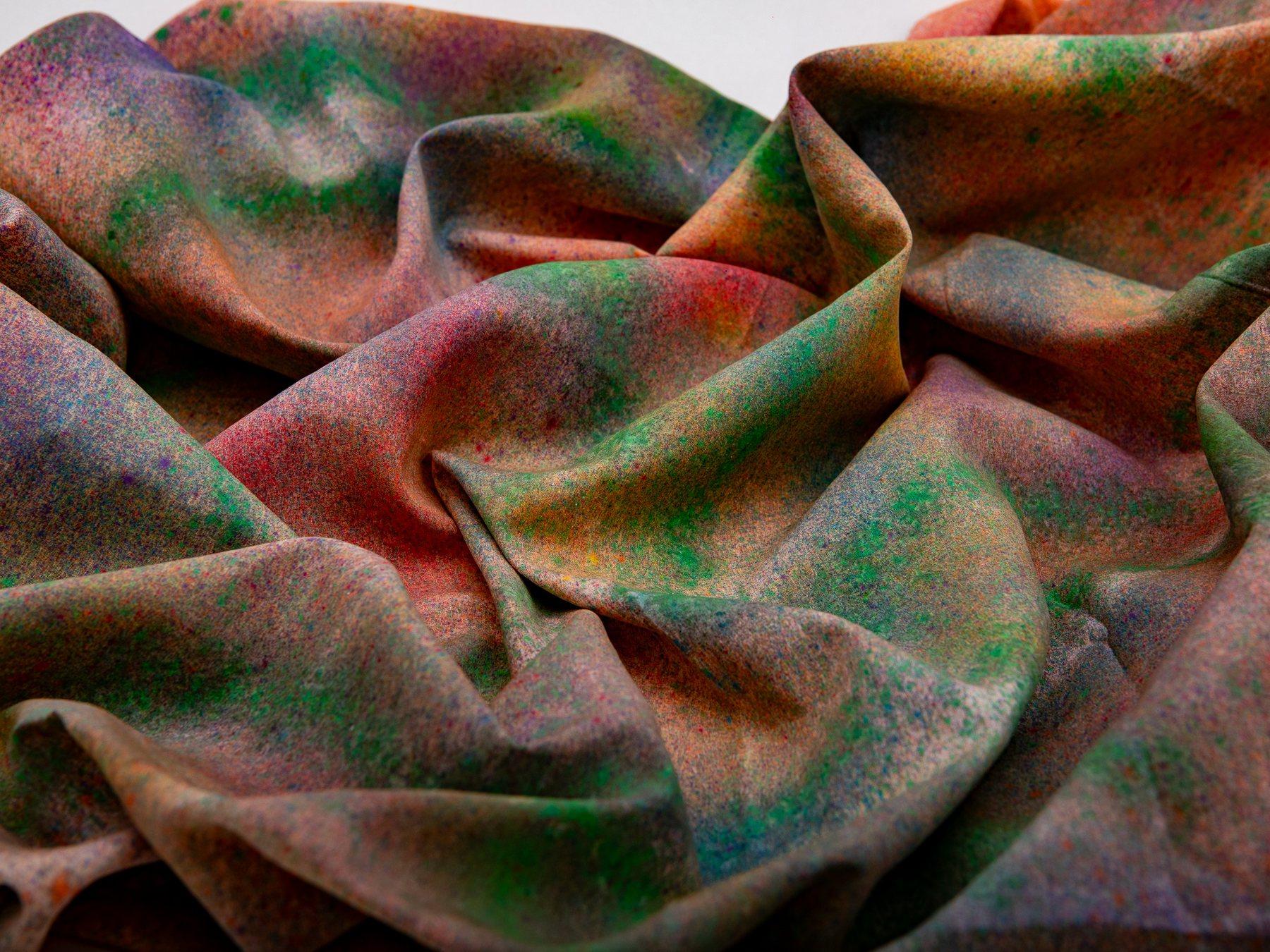
Real dirt is never one flat brown. Muddy colour is built by layering the six Fabric Spray colours in light coats, and the broken, uneven result is what makes it convincing.
- Orange, very lightly. Mist it over other colours for rust and dry earth.
- Green over Orange. The two pull each other towards brown and olive. Good for moss, damp and old mud.
- Red and Violet in the shadows. A little of either deepens the dark places, such as folds and the inside of a hem.
How the layers read depends on the cloth underneath. On pale cotton the colours stay clear. On a mid-tone fabric they turn to grime sooner. Test on an offcut of the same fabric.
The method
- Distress firstDo any sanding, fraying or tearing before you paint. The paint then settles into the damage the way dirt would.
- TestShake the bottle well and try the layers on an offcut of the same fabric. Let it dry before judging it.
- CrumpleScrunch the cloth loosely in your hands, set it down and spray across it. The ridges catch the colour and the folds stay cleaner.
- Spray lightSpray from about 15 to 20 cm away in short, light bursts. Build the effect up gradually, a pass at a time.
- LayerOpen the cloth out, crumple it a different way and spray the next colour. Three thin layers look older than one thick one.
- SoftenWhile the paint is wet, dab hard edges with a damp sponge to blur them.
- DryLay the piece flat and leave it for 24 hours.
Fix it so it survives the day
Heat setting makes the weathering permanent. After 24 hours, iron the cloth on the cotton setting, on the reverse side, for about 5 minutes. Then wait 48 hours before washing. After that the piece is machine washable, inside out.
If the care label calls for a cooler iron, use the hottest setting it allows, iron for longer through a pressing cloth, and test on the offcut first. The full method is in how to heat set fabric paint.
Once set, the cloth stays flexible, so a weathered cape still drapes and moves. For colour work and metallic detail on the same costume, see fabric paint for cosplay and the page for cosplayers.
Questions
How do you weather a cosplay costume?
Distress the fabric first, then build up dirt in light layers of fabric spray paint at the hems, knees, elbows and seams. Let it dry for 24 hours and heat set it with an iron so the weathering stays in the cloth.
How do you make fabric look dirty without it rubbing off?
Use a textile paint and heat set it. Build the dirt in light layers of fabric spray paint, let it dry for 24 hours, then iron on the cotton setting, on the reverse side, for about 5 minutes. Once heat set, the colour is permanent in the cloth.
What colours make fabric look dirty or rusty?
Layer them. Mist Orange lightly over other colours for rust and dry earth. Spray Green over Orange for olive, brown and old mud. Add a little Red or Violet in folds and hems to deepen the shadows.
FABCO Colours Library, No. 05. Published 21 September 2026.