Colour Lab
Mix the ten Silk Paint colours on screen, or match a colour from a photograph. The wheel shows where each mix sits, and the colour directly opposite it.
Dots are the ten Silk Paint colours. The large ring is your mix and the dashed ring is its opposite. Press anywhere on the wheel to match that colour.
Yellow-green
2 parts Yellow, 1 part Blue
Set the number of parts of each colour. The swatch and the wheel update as you go.
- Red
- Yellow
- Blue
- Green
- Violet
- Black
- White
- Rose Pink
- Plum
- Orange
- Water
Opposite colour
Yellow-green
Red-violet
2 parts Red, 1 part Blue, 1 part Rose Pink, 1 part water
Opposite colours face each other across the wheel. Side by side they give the strongest contrast. A little of one mixed into the other makes it quieter and more natural.
Colours that work with it
Contrast with a softer edge. Use the two neighbours of the opposite as accents.
Yellow-green
Your mix
Violet
2 parts Green, 5 parts Rose Pink, 1 part water
Red
2 parts Red, 1 part Yellow, 3 parts Plum
Lighter, darker and quieter
Thinner
Add 5 more parts water
With White
Add 3 parts White
As mixed
2 parts Yellow, 1 part Blue
A touch of Black
Add Black a drop at a time
Toned down
Add a little of the opposite colour
Value and temperature
- 68 of 100A light colour
- CoolCool colours sit back
- #81A63CFor matching in design software
Value is how light or dark a colour is, apart from its hue. A design reads clearly when its light and dark areas are planned first.
Your palette
Save a mix to keep its recipe here. The palette is stored on this device.
Mixing at the bench
Start with the lighter colour and add the darker one a little at a time. Keep a note of the parts so the mix can be repeated.
The Lab estimates each mix from the colours of our jars. Use it to plan, then mix a small test and adjust by eye. Colours shown on screen are a guide.
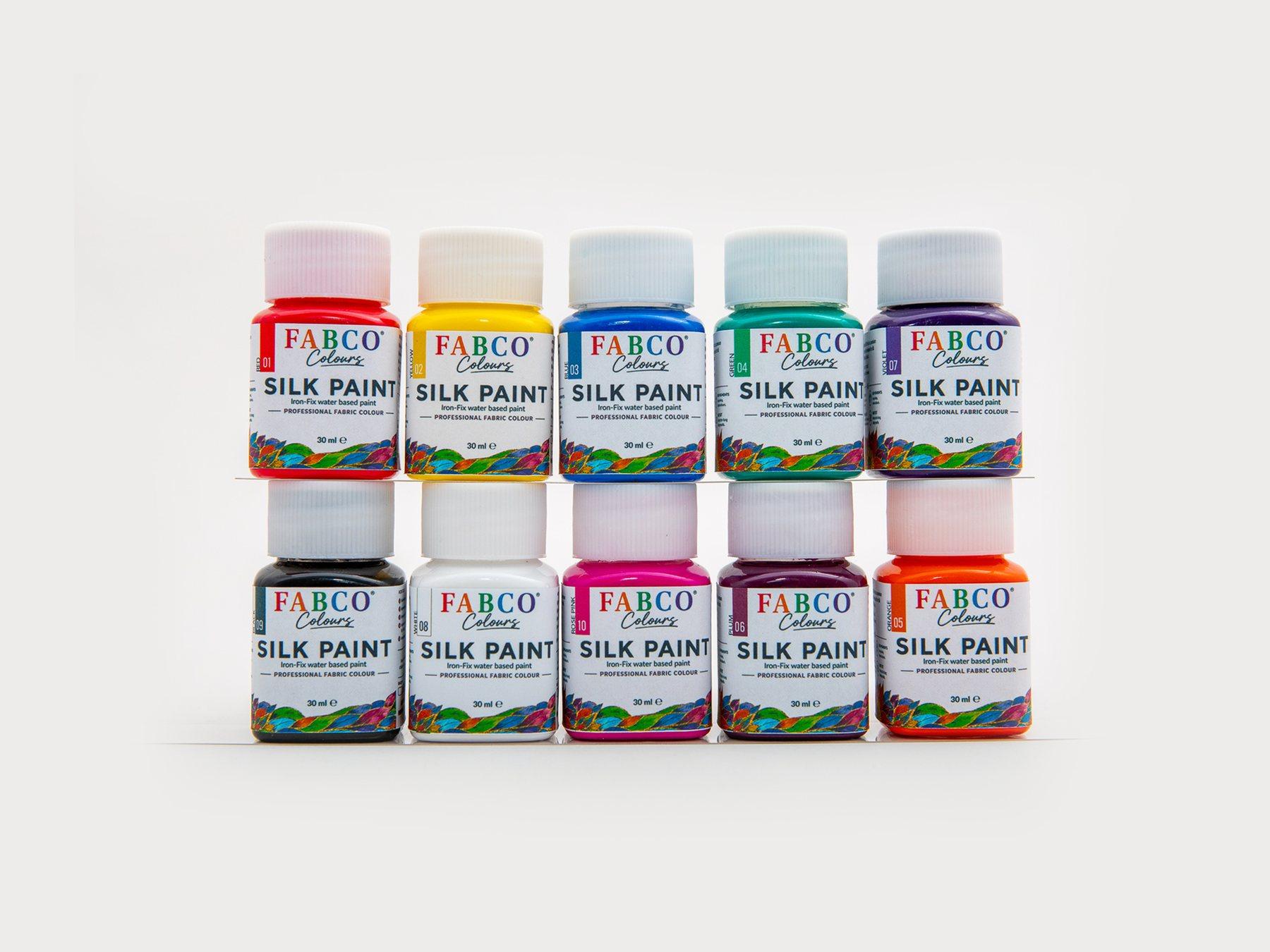
Every colour here is in the Silk Paint Set.
Reading the colour wheel
The wheel has twelve hues, with red, yellow and blue as the primaries. Lighter tints run towards the centre and darker shades towards the rim. Greys, black and white gather in the middle.
Colours next to each other blend easily. Colours opposite each other give the strongest contrast.
How do I make a colour lighter?
Thin Silk Paint with water for a lighter, more transparent colour, or add White for a soft pastel. The Lab shows both under Lighter, darker and quieter.
How do I make a colour less bright?
Add a little of its opposite colour. Opposite colours face each other on the wheel, and a small amount of one makes the other quieter and more natural.
What is the opposite of blue on the colour wheel?
Orange. On the painter's colour wheel the opposite pairs are blue and orange, red and green, and yellow and violet.
Can I match a colour from a photograph?
Yes. Choose Match a colour, then Use a photograph, and press any point on the picture. The photograph is read on your own device and is not uploaded.
How accurate are the recipes?
They are estimates made from the colours of our jars, and a good starting point. Mix a small test first and adjust by eye. Colours shown on screen are a guide.
Silk Paint Set, 10 × 30ml.
Every kit is dispatched from the United Kingdom with free tracked UK delivery. Orders to the United States are sent with duties paid. Available from our official eBay and Etsy shops.
100% positive feedback from 521 eBay ratings- Silk Paint, 10 × 30mlBuy
eBay £22.27, Etsy £20.99