
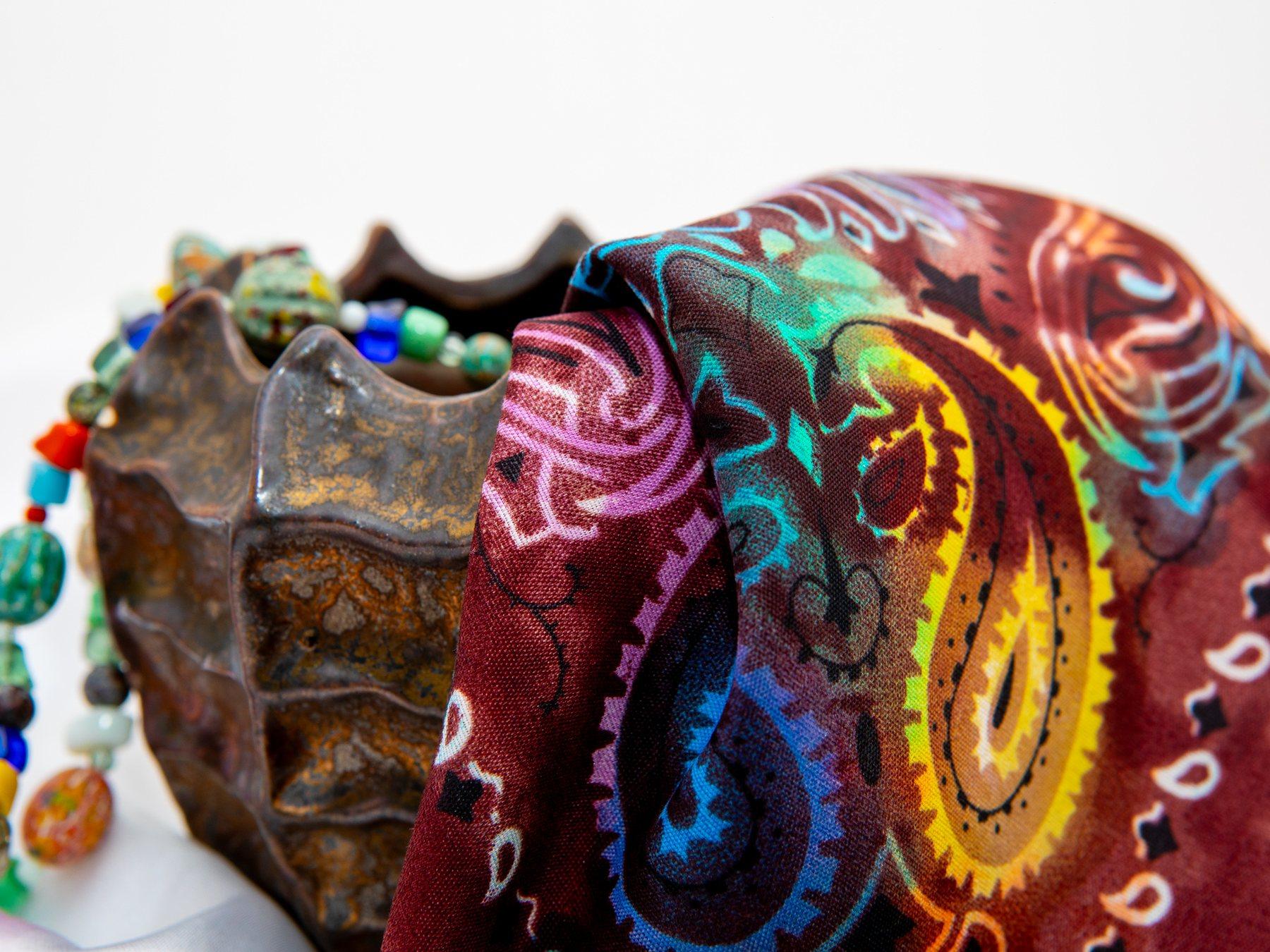
A dupatta is a long, narrow length of silk, often two metres or more. The way to paint it well is in sections, one table length at a time.
Keep the fabric flat and supported, decide in advance where each section ends, and let each one dry before moving along. Silk paint blends while wet, keeps the silk soft and is permanent after heat setting.
Check the fabric and test first
Silk paint is made for silk. Check the fibre label on the dupatta, or ask the seller to confirm the fabric.
Then paint a test patch. Use a spare piece of the same fabric, or the inner end or corner that shows least when the dupatta is worn. Paint a small patch of each colour, let it dry, heat set it and look at it in daylight. This shows the exact colour and feel before work begins on the full length.
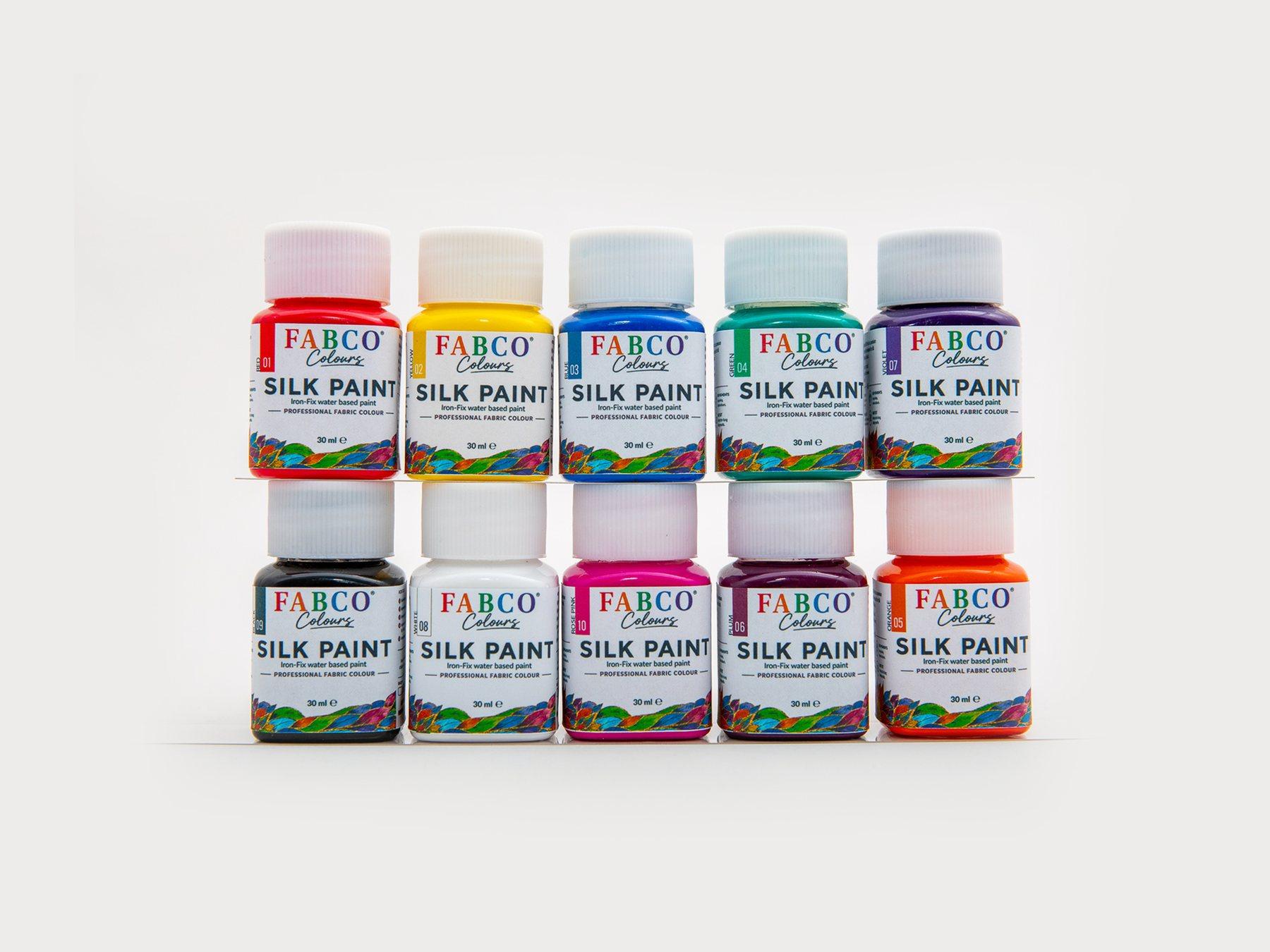
Shortlist colours on the colour chart, then confirm them on the test patch.
Prepare the dupatta
- WashWash and dry the silk if it is new, so nothing sits between the fibre and the paint.
- PressIron it smooth, so the colour lies evenly across the surface.
- Protect the tableCover a long table with plastic sheeting. Paint passes through fine silk, and the sheeting keeps the table clean.
- Support the lengthLay the section you are painting flat. Rest the remainder, loosely folded, on a clean chair at each end, so the wet section stays flat and still.
With a silk frame, stretch one section on it at a time. Lifted silk gives the most control. On a flat table the wet colour touches the cover beneath and spreads a little further, which suits loose, flowing effects. The test patch shows how far.
Plan the design in sections
Decide where each section begins and ends before opening a jar. Borders, repeated motifs and scattered small shapes all break naturally. A single wash along the full length is a good project once you have painted a few.
For motifs, look to the traditional styles you admire. The bold outlines of Madhubani painting and the flowing vines and flowers of Kalamkari are rich sources of inspiration.
Paint the dupatta
- ShakeShake each jar well.
- Start at one endPaint the first section with a soft brush, or a sponge for large areas. Violet makes a deep ground for a border. Rose Pink and Yellow sit well against it for flowers and their centres.
- Thin for a washAdd a little water to the paint for a pale wash. Use it at full strength for the deepest colour.
- Blend or keep apartBlend two colours while both are wet for a soft edge. For a crisp shape beside its neighbour, let the first colour dry before painting the second.
- Stop at a natural breakEnd each section at the edge of a motif. The join then falls on the outline of the design and disappears into it.
- Dry, then move alongLet the section dry completely before shifting the fabric. Then paint the next.
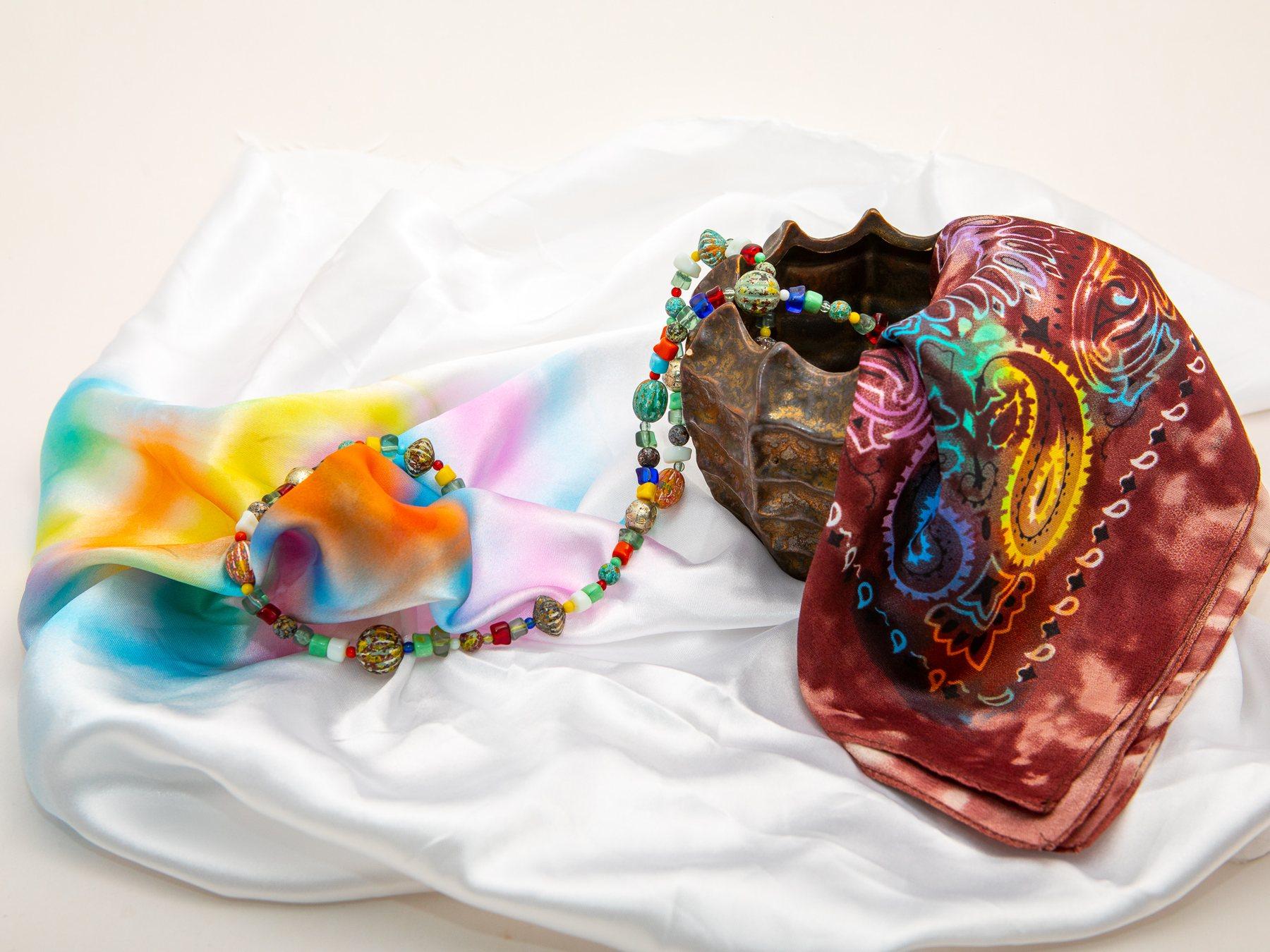
For shapes with clean edges, outline them first in gutta. The colour flows up to the line and stops.
Heat set and care
When the whole length is completely dry, iron it on the cotton setting, on the reverse side, for about 5 minutes. On a long piece, work along it one area at a time and give each area its full time, so every part is set.
Wait at least 24 hours before washing. After that, hand wash in cool water with a mild detergent. Do not bleach it and do not tumble dry it. Iron on the reverse side if it needs it.
Questions
How do you paint a silk dupatta at home?
Wash and press the silk, lay one section flat on a protected table, and paint it with water-based silk paint using a soft brush or sponge. Work along the length in sections, letting each one dry before you move on. Heat set with an iron, then wait at least 24 hours before washing.
Which paint is best for a silk dupatta?
A water-based silk paint, because it flows into the fibre and keeps the silk soft. FABCO Silk Paint comes in ten colours that blend while wet. It is permanent after heat setting with an iron on the cotton setting, on the reverse side, for about 5 minutes.
Can a hand-painted dupatta be washed?
Yes, once the silk paint is heat set. Iron on the cotton setting, on the reverse side, for about 5 minutes. Wait at least 24 hours, then hand wash in cool water with a mild detergent. Do not bleach or tumble dry.
FABCO Colours Library, No. 09. Published 19 October 2026.